


The book about Lázaro de Tormes

The book about Lázaro de Tormes
49.99 €
"The Book of Lázaro de Tormes" is the code name for a series of works united by a single protagonist, based on "The Life of Lazarillo...," a story published anonymously in the mid-16th century about the fate of a boy who, against his will, becomes a cunning rogue in a brutal struggle against poverty and hunger.
The story was published during the height of the Spanish Inquisition and was later banned by the Catholic Church. This is unsurprising, as this story challenged the generally accepted value system of the era of Charles V: blind adherence to a "code of honor," ostentatious heroism, and hypocritical observance of religious rituals. It subsequently spawned a colossal literary tradition and became a milestone in the history of world literature, one of the most striking works of the Renaissance. This story was destined to become the work that launched both the Spanish picaresque novel and, more broadly, the European novel of the modern era.
The story's central character—a rogue and "antihero"—proved to be such a significant symbol of the era that today, neither Spanish nor world literature as a whole is imaginable without this text. Multifaceted and polyphonic, the Toledo town crier, affectionately nicknamed Lazarillo, is rightfully recognized as a national archetype and takes his place alongside the most prominent hero of Spanish literature—the cunning hidalgo Don Quixote of La Mancha.
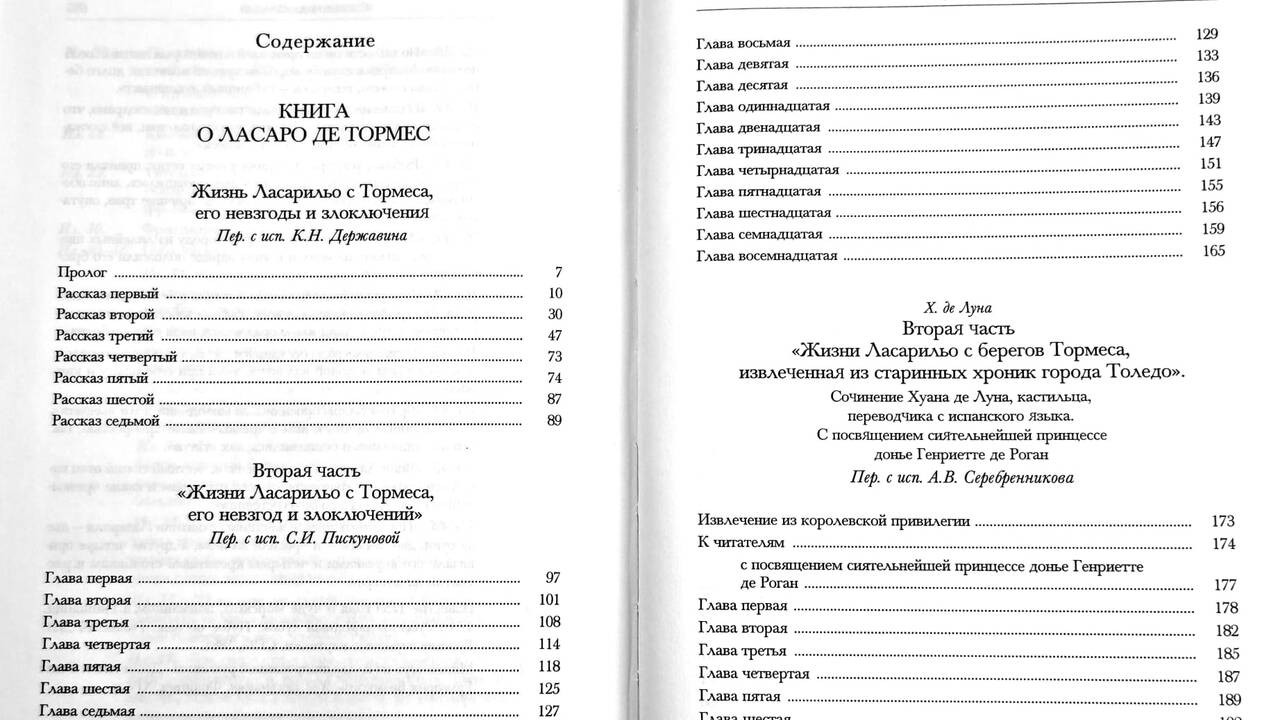
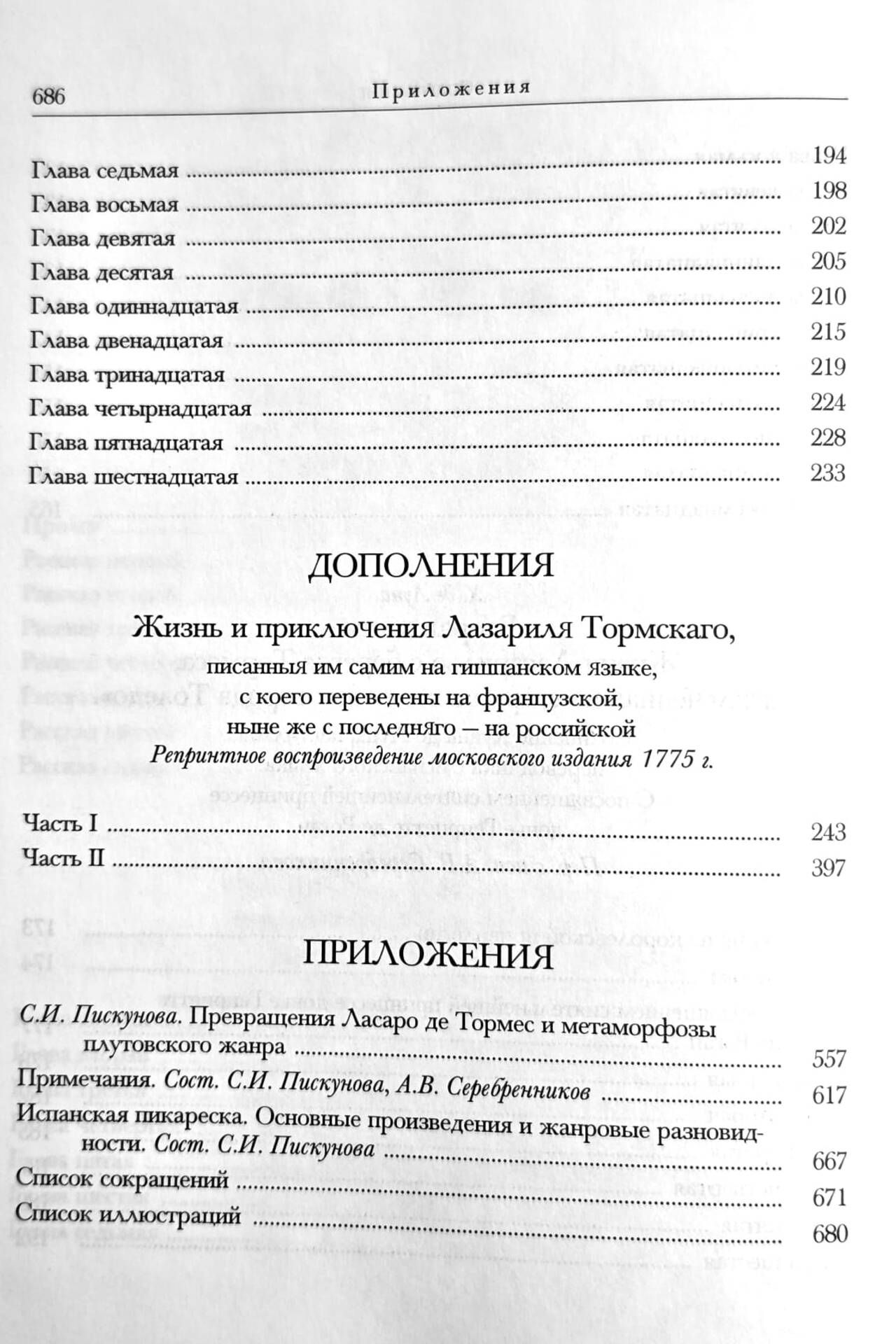
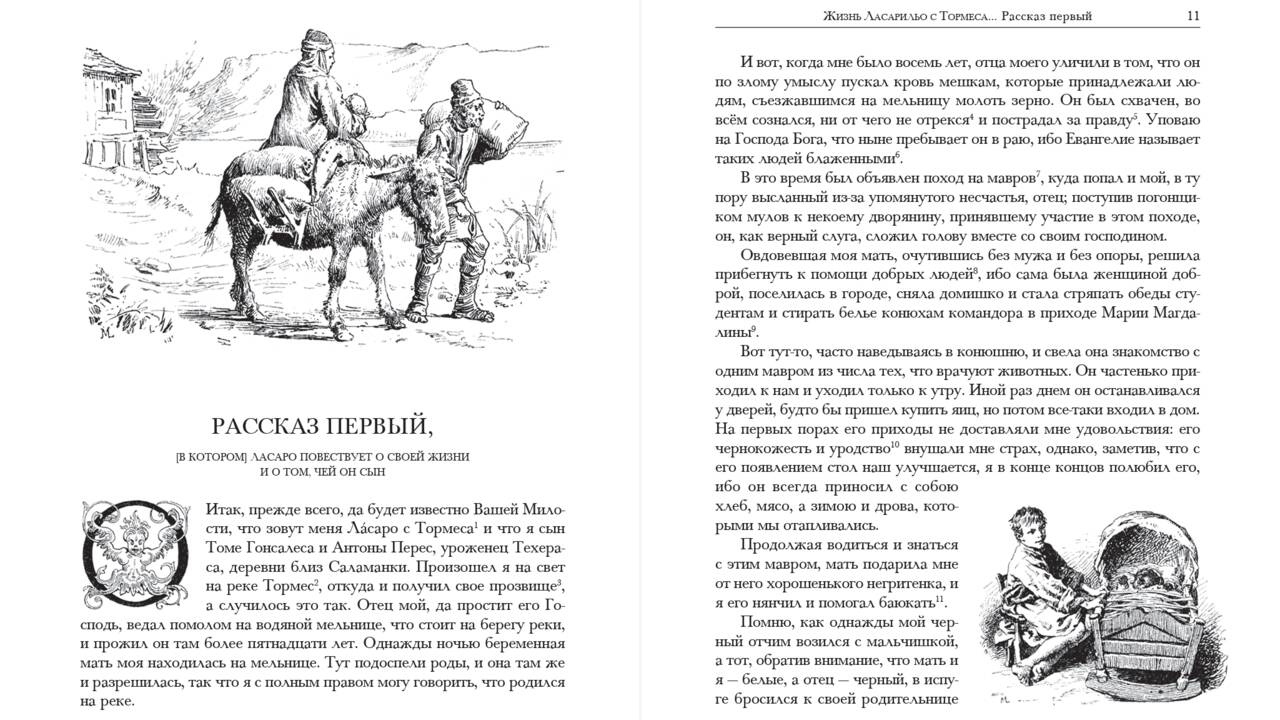
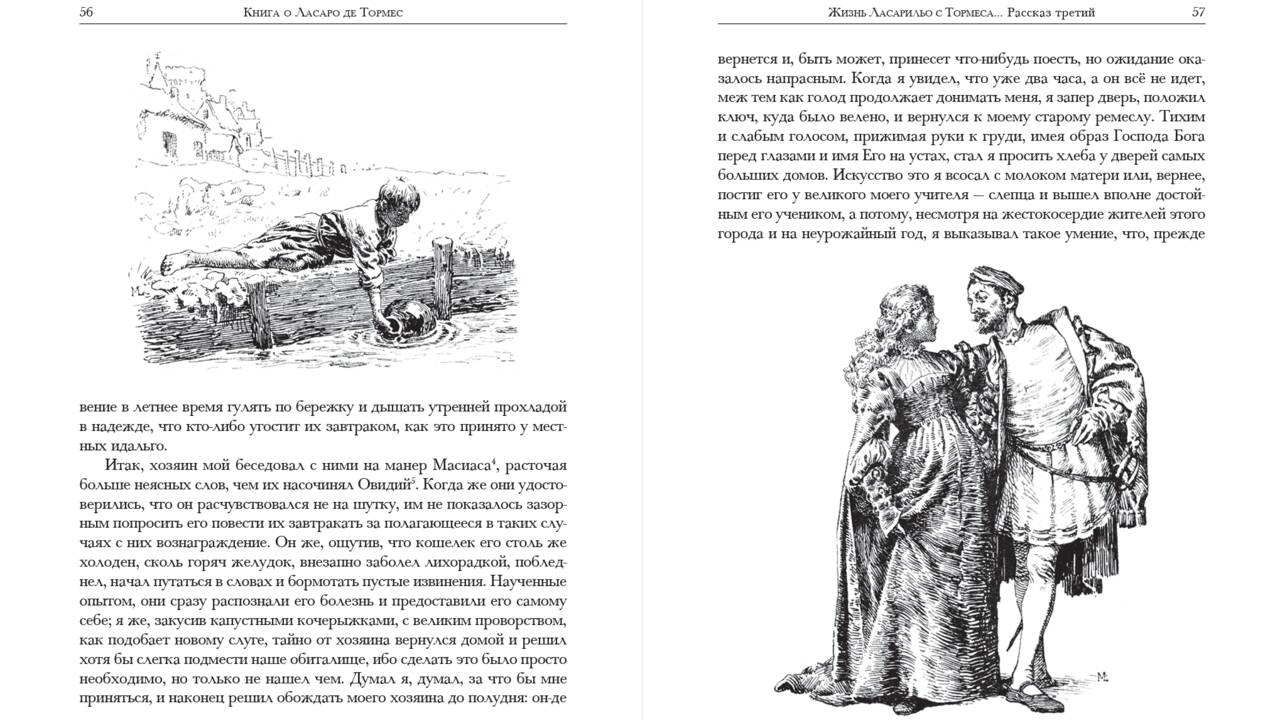
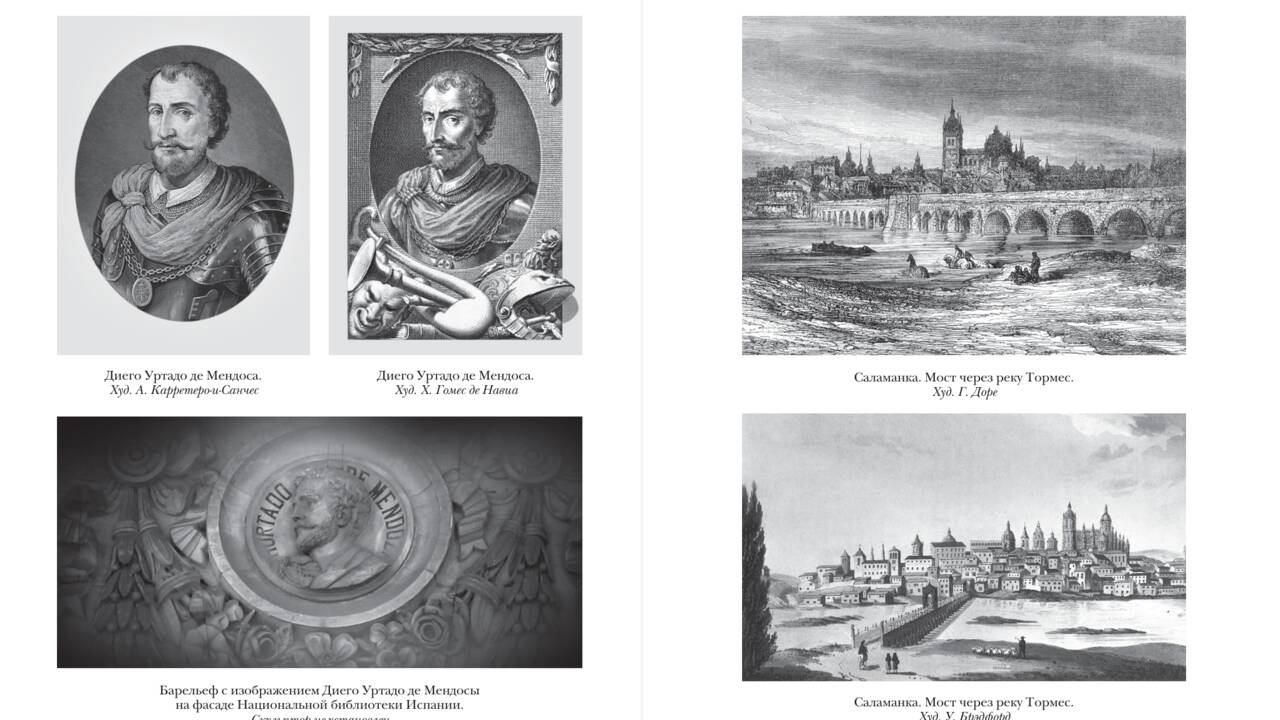
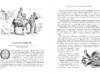
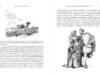
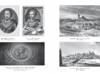
The trilogy about the life and adventures of Lazaro is published in Russian in its entirety for the first time: the first part with restored cuts, and the second and third in translations specially prepared for this edition. The book reproduces classic illustrations by Maurice Leloir, as well as a rare edition of the first Russian translation of "Lazarillo" (1775), which, despite some liberties, is filled with the richest Russian language and is a valuable resource in its own right. This edition is recommended for a wide range of readers.
The story was published during the height of the Spanish Inquisition and was later banned by the Catholic Church. This is unsurprising, as this story challenged the generally accepted value system of the era of Charles V: blind adherence to a "code of honor," ostentatious heroism, and hypocritical observance of religious rituals. It subsequently spawned a colossal literary tradition and became a milestone in the history of world literature, one of the most striking works of the Renaissance. This story was destined to become the work that launched both the Spanish picaresque novel and, more broadly, the European novel of the modern era.
The story's central character—a rogue and "antihero"—proved to be such a significant symbol of the era that today, neither Spanish nor world literature as a whole is imaginable without this text. Multifaceted and polyphonic, the Toledo town crier, affectionately nicknamed Lazarillo, is rightfully recognized as a national archetype and takes his place alongside the most prominent hero of Spanish literature—the cunning hidalgo Don Quixote of La Mancha.
The trilogy about the life and adventures of Lazaro is published in Russian in its entirety for the first time: the first part with restored cuts, and the second and third in translations specially prepared for this edition. The book reproduces classic illustrations by Maurice Leloir, as well as a rare edition of the first Russian translation of "Lazarillo" (1775), which, despite some liberties, is filled with the richest Russian language and is a valuable resource in its own right. This edition is recommended for a wide range of readers.
See also:
- All books by the publisher
- All books in the series Literary monuments